
What Ignite was really about
Ignite 2026 was a lot. Microsoft's Book of News lists 59 announcements, the opening keynote ran for nearly two and a half hours, and there were dozens of partner sessions on top. The recaps since have mostly done the same job: here's what Microsoft launched.
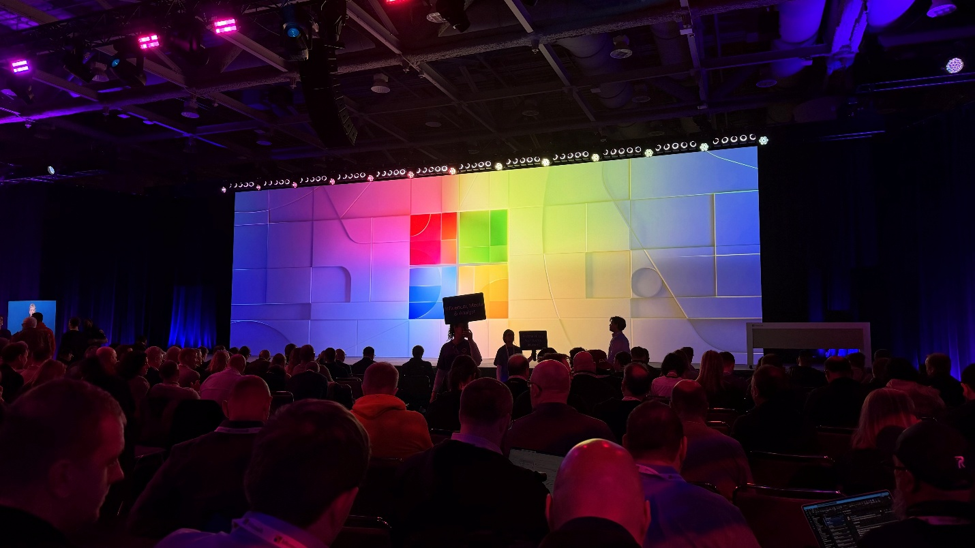
I think they've missed the bigger story. Sian and I spent the week at Ignite, and once you take the products away, one shift ran through every partner session we sat in: Microsoft is changing what it pays partners for. For years, the partner model rewarded transactions: licences sold, seats activated, consumption grown. At Ignite, Microsoft made it clear that the next era rewards something harder to fake. Proof of capability, proof of customer outcomes, and proof that you're using AI in your own business.
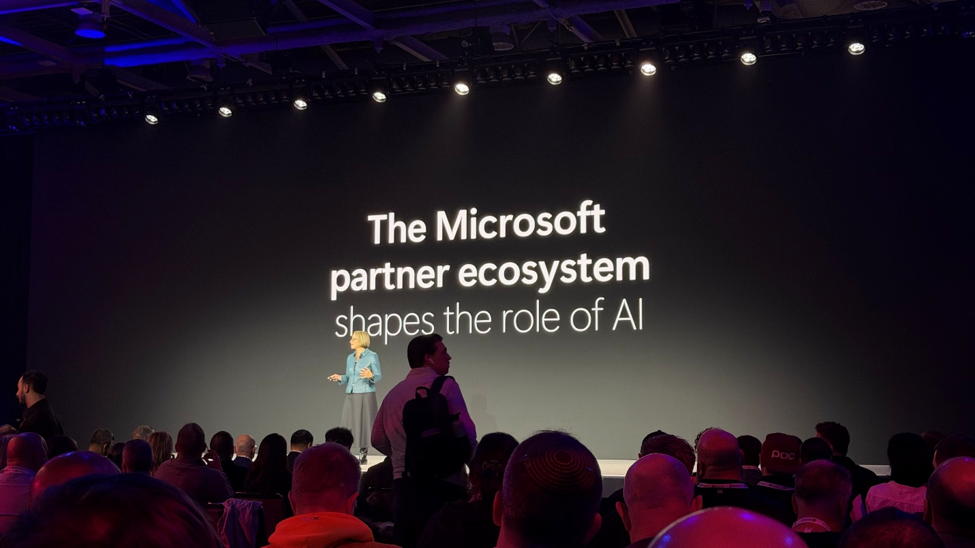
Once you look for it, it's everywhere. A new Agentic Capability Score that measures how you build and use agents. A Frontier specialisation that needs a third-party audit. Incentives that reward new growth over moving customers between partners. Skilling measured by what happens in customer engagements, not course completions. Even Chief Partner Officer Nicole Dezen framed growth around earning customer trust, not having the most powerful model.
The prize is big. IDC expects worldwide AI spend to reach $3.1tn by 2030, and partners building AI solutions already generate nearly 3x the economic value of transaction-only partners.
My view is simple: in 2027, the partners who win won't be the ones who sell the most Microsoft. They'll be the ones who can prove the most value, in a way Microsoft can measure. The rest of this post explains why, and what to do about it.
What Satya Nadella's keynote really tells partners
Satya Nadella opened Ignite on 17th November with a clear pitch: Microsoft wants to provide every layer businesses need to build, run and govern AI, from models and data to security and silicon. His framework is worth reading closely, because it explains a lot of what Microsoft then asked of partners. (The full list of keynote announcements is in the appendix at the end.)
Three pillars
Satya built the keynote around what he calls the "frontier ecosystem", resting on three pillars:
- Human ambition at the centre. AI should amplify human purpose, expertise and judgement, not replace them.
- Ownership of your intelligence. Organisations should own their intelligence and learning. Nadella called it an architectural imperative to separate intelligence from the authority over it.
- Trust built into the infrastructure. AI that is open, observable and secure is what allows it to spread broadly.
"We need to parlay any technological advance into real outcomes and new points of leverage for people, organizations and society at large," he said.
Reading between the lines
Strip out the product names and the keynote makes four bets that matter for partners.
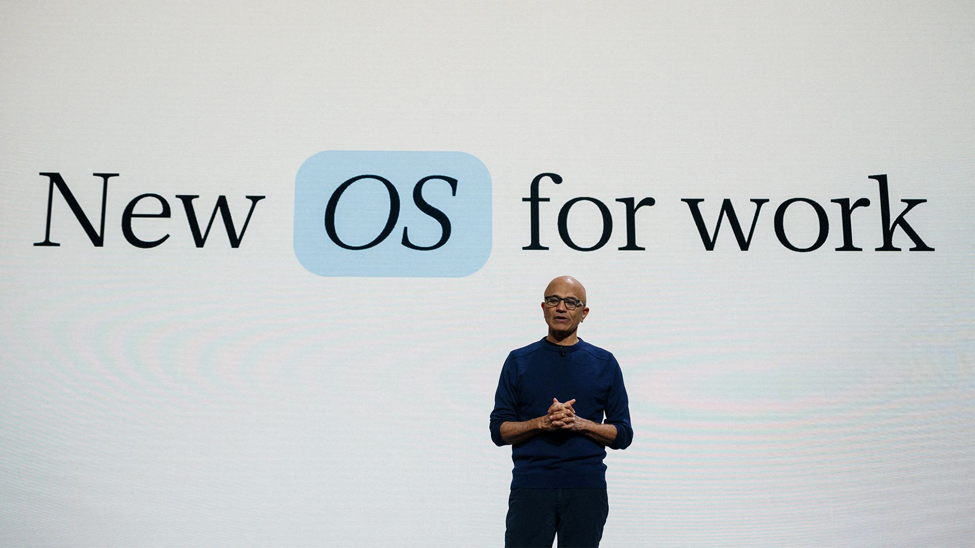
Copilot becomes the place work happens. With Office, Cowork, Code and Autopilot in one experience, Microsoft is positioning Copilot as the "new operating system for work". Licences won't be the hard part. Redesigning how a finance or sales team actually works will be, and that's partner work.
Context is the new bottleneck. Microsoft IQ is generally available with no new SKU, which tells you Microsoft sees context, not models, as the limit on what agents can do. Agents are only as good as the data, permissions and lifecycle management underneath them. Most customers aren't ready, and someone has to get them there.
Cost becomes a design decision. Foundry now offers 11,000+ models, and the model router can be up to 65% cheaper than sending everything to a frontier model. When the CFO is asking about token spend, the partner who can design for cost wins the conversation.
Trust is the product. Agent 365, Microsoft Perception and the AI Transparency Initiative all point the same way. AT&T is already governing 60,000+ agents. Every agent a customer deploys creates a governance question, and governance doesn't configure itself.
Notice what the customer stories on stage had in common. Chevron cut months off engineering design documents. AT&T put risk scoring and cost controls around tens of thousands of agents. None of them led with a product. They led with a measurable result, which is exactly the standard Microsoft is now holding partners to.
Behind the headlines: five shifts in how partners make money
Here's the evidence for my view. These five shifts came up again and again across the partner sessions, and together they redraw how partners make money with Microsoft.
1. Microsoft now pays for capability, not just transactions. The new Agentic Capability Score sits inside Partner Score and counts how you use Copilot Studio, Foundry, GitHub Copilot and Fabric, plus consumption and skilling. It feeds designations, specialisations, incentives and eligibility for funded engagements. In practice, your Partner Center data is now a commercial asset: if it's incomplete, you're leaving money on the table.
2. Marketplace is the default route to co-sell. Marketplace has doubled for the third year running and Microsoft's investment in it is up 200%. Around 60% of future transactions are expected to involve an SDC plus at least one channel partner, and channel-led private offers average 80% larger. If you're not transacting through Marketplace, you're increasingly outside the co-sell motion.
3. The buyer has changed. AI budgets are moving from IT to business leaders, and CFOs are asking about token usage, predictable costs and FinOps. Microsoft's own advice: stop asking "where can we deploy an agent?" and start asking "which processes should we transform, and what value will it create?" Customers aren't buying reclaimed hours; they're buying what those hours enable.
4. Governance is the new way in. AT&T is already governing 60,000+ agents. Shadow AI is growing, and Microsoft launched a wave of agent controls across Agent 365, Entra, Intune, Defender and Purview. Most customers won't configure these themselves. That's a services opportunity in discovery, governance and managed security that sits right next to every Copilot deal.
5. You're expected to be customer zero. Microsoft wants partners transforming their own businesses first, and the numbers back it up. Softcat cut RFP effort by 4x to 6x and saves 20 to 40 minutes per person per day. Arrow's resellers using AI grew 33%, nearly twice as fast as those not. Your own AI story is now part of your sales pitch.
Our advice, by partner type
If you're an SDC
- Enrol in Frontier Accelerate for Marketplace. The free path includes up to $80k in build-and-publish cash incentives (previously for certified partners only) and unlocks Azure sponsorship as you grow, up to $425k. The premium path costs $1,550 and gives you $30k Azure sponsorship straight away, plus an engagement manager and architecture reviews.
- Aim for certified software designation. It unlocks the top tier: up to $2.1m in Azure sponsorship for deals, POCs and migrations, plus up to $160k in modernisation incentives.
- Build a channel, not just a listing. Pick your priority markets and authorise channel partners per country through resell-enabled offers (REO) in Partner Center. Use multiparty private offers (MPO) to bring in resellers and services partners. Cisco onboarded 20+ channel partners and grew Marketplace sales 8x; Veeam doubled its Marketplace business by treating it as a sales platform.
- Get ready for bundling in early 2027. You'll be able to package software, professional services and implementation into one private offer. Line up your services partners now so you're ready on day one.
- Rethink pricing carefully. SDCs face a shift from predictable SaaS licensing to outcome-based pricing. The SDC and SI leaders panel was clear: don't commit to outcome-based contracts without the governance, financial backing and delivery capability to support them.
- Don't ignore SMB. Marketplace is no longer only for enterprises with Azure commitments. Self-service buyers and customers buying through trusted channel advisors are both now in play.
If you're an SI or services partner
- Check your Agentic Capability Score, then pick your specialisations. New options include Agentic Business Solutions, Digital Sovereignty and healthcare. The Frontier specialisation sets the highest bar and needs a third-party audit, so budget time and cost for it. Apcor, EPAM and FPT have already earned it.
- Productise three new services. Microsoft named FinOps for AI as a new opportunity with three services lines: AI economic advisory, AI economic governance, and operations and optimisation. Pair it with an agent governance offer built on Agent 365 and Microsoft Perception.
- Move from consulting to outcomes. The winners on stage are shifting to outcome-based engagements, monetisable IP and managed services. Start with processes where value is easy to prove, like order-to-cash and invoicing. Insight's approach: land on Monday, proof of value by Friday.
- Use Microsoft's money for pre-sales. Frontier Accelerate funded around 20,000 engagements between July and October, influencing almost $3bn in incremental revenue. Funded proofs of concept and deployments are tied to your capability scores and specialisations.
- Get your sellers skilled. Highly skilled partners achieve 3.2x better outcomes. Book the AI Value Accelerator Bootcamp (for sellers and delivery consultants), and look at the Frontier Transformation Engineer badge (37,000+ enrolled) and Frontier Sales Professional Titan, where sellers practise with AI-simulated customers.
If you're a CSP or channel partner
- Use the M365 E7 Copilot activation offer. Customers with 300+ E7 seats get $7,500 in Copilot credits, plus up to $12,500 more when 50 users spend $50 a month.
- Know the margin levers. Growth margin adds incremental margin on significant E SKU growth deals (with an unexpected number of three-year deals so far). Growth Accelerator adds incentives on business SKUs, CSP PayGo economics reach up to 26%, and capacity packs no longer need the buy-five requirement.
- Focus on net new, not share shift. Change-of-channel-partner events are down almost 70%, and incentives now reward bringing new customers into the ecosystem over moving existing ones between partners.
- Start reselling on Marketplace. Channel partners need no competencies or revenue thresholds, just a partner ID, Marketplace enrolment in Partner Center, and tax and payment profiles. REO lets you lead the sale while Microsoft bills the customer.
- Look at Unified support. Unified EA Co-sell pays 3% on single-year and 4% on multi-year Unified deals you bring to Microsoft, on top of broker fees. A $10m deal pays $300k, or $400k a year on multi-year. The pilot covers the UK, US and Australia, so UK partners can act now.
- SMB is wide open. Only one in five EU businesses actively use AI. Microsoft's view is that SMB-focused partners can generate the same economic value as enterprise-focused ones.
What other recaps won't tell you
- Much of it isn't ready yet. A large share of the announcements are in preview or limited to the Frontier programme. Check availability before you put anything in a customer proposal.
- Funding has already been adjusted. Microsoft made one-off incentive changes in October, targeting lower-ROI regions and segments. Partners raised that Security Frontier Accelerator recommended hours no longer match the reduced funding, and Microsoft agreed updated guidance is needed. Check the current numbers before you scope a funded engagement.
- Incentives are a means, not the end. Microsoft's John Corwin was blunt: sell value, not price. CDW only applies growth margin when deal economics need it, and uses it to self-fund services entry points.
- Partner Center for Sales won't replace Partner Center. Co-sell moves into Teams (SoftwareOne's pilot added around $83m in pipeline), but your Partner Center hygiene still drives everything else.
- Specialisations now come with audits. Copilot and security specialisations include audit requirements, and they no longer need to be earned in sequence. Plan for the evidence, not just the training.
My view: 2027 will be decided by the readiness gap
Put all of this together and a clear picture emerges. Microsoft has built the products, opened up the funding and simplified the routes to market. What it can't do is make partners ready to use them.
That readiness gap is where I think 2027 will be won and lost. Plenty of partners have real AI capability today but can't evidence it. Their Partner Center data is incomplete, their skilling isn't recorded, their Marketplace offers aren't transactable, or their customer wins aren't attributed. Under the old model, that cost a few points. Under the new one, it decides your designations, your incentives and whether Microsoft's sellers bring you into deals.
So my challenge to every partner reading this is simple. Don't ask "what did Microsoft launch?" Ask: "Could Microsoft see our value today, in the data it uses to decide who to back?" If the honest answer is no, that's the first thing to fix, before any new product, offer or campaign.
How Noteworthy can help
Closing that gap is exactly what we do. We work where Microsoft expectations and partner reality collide, helping partners turn what they can do into something Microsoft can see, measure and reward.
- Microsoft Alliances-as-a-Service: a dedicated alliance function that builds your Microsoft relationships, co-sell motion and go-to-market, without the cost of an in-house hire.
- Partner Center Health Check: an independent review of your Partner Center setup, so you can see where you stand on Partner Score, designations and the new Agentic Capability Score.
- Marketplace Mastery™: our programme for SDCs to list, sell and scale through Microsoft Marketplace, including MPO, REO and Frontier Accelerate for Marketplace.
- CSP Growth Ops: our new joint solution with Onyx, helping CSPs grow with the latest incentives and offers.
Want the full debrief? Join me and Ingram Micro for our Ignite Round Up webinar on Thursday 26th November at 2pm, where we'll walk through what happened and what to do next. Register here: Ignite Round Up Webinar
Or if you'd rather talk it through one to one, book a call with the team: Contact Noteworthy, Microsoft Partner Support.
Appendix: Ignite 2026 at a glance
For reference, here are the announcements behind my view, with their status at launch. Many are in preview or limited to Microsoft's Frontier programme, so check availability before building them into customer plans.
From Satya Nadella's keynote
Copilot: the new operating system for work
Copilot now brings Chat, Cowork, Code and Autopilot into one experience, grounded by Work IQ in your emails, meetings, projects and organisational relationships.
- Office in Copilot is generally available, with full Word, Excel and PowerPoint inside Copilot.
- Copilot Code builds dashboards, trackers and apps from plain English, with enterprise security and governance built in. It's in the Frontier programme now, with general availability due in December.
- Copilot Cowork carries out multi-step tasks within spend limits set by IT.
- Autopilot, a long-running agent with its own identity, is rolling out to Frontier customers. It manages recurring tasks and moves projects forward without a prompt at every step.
- Copilot Workspaces gives people and agents a shared space to work as a team (Frontier programme).
- Copilot Today brings a proactive Brief and Feed across mail, calendar and Teams (private preview).
- Role-based experiences for sales, finance, legal, healthcare and software development. The Dynamics 365 Sales and ERP plugins are generally available, and Salesforce in Copilot is in preview with 38+ prebuilt sales skills.
- GitHub Copilot adds Projects and Fusion multi-model orchestration.
Microsoft IQ: your organisation's context, governed
Microsoft IQ is now generally available, with no new SKU. It takes the intelligence layer built beneath Copilot and opens it up to every app and agent, combining Work IQ, Fabric IQ, Foundry IQ and Web IQ with hundreds of connectors across structured data, documents, business systems and the web. It works across Copilot, GitHub Copilot, Foundry and MCP-compatible tools, and new business plugins (Frontier programme) package company knowledge into reusable skills and tools.
Foundry and models: the right model for each task
- Foundry now offers more than 11,000 models, including OpenAI, Claude, Meta and Microsoft's own MAI family.
- The model router now draws on a pool of the top 50 models, matching each request to the best fit for cost and performance.
- Microsoft-Decision-1.1, a fast, low-cost model for routing, classification, prioritisation and workflow control, is generally available.
- New MAI models for coding, cyber and images, with MAI-Code-2 now generally available in GitHub.
- Mustafa Suleyman detailed the MAI family, including custom licensed model weights that customers can run privately.
- New continuous improvement tools help agents learn from production signals, optimising for quality, latency and cost.
Trust, security and governance
- Agent 365 is the control plane for agent identity, governance, management and observability. New Business Analytics shows AI costs, outcomes, task success and hours assisted, and Cost Management adds spend visibility and policies.
- Microsoft Perception (formerly Project Perception) is generally available: specialised red, blue and green team agents that find, defend against and remediate vulnerabilities. Its Triage Agent covers around 80% of alerts in a typical Defender queue.
- Agents on Windows get built-in identity through Entra, Microsoft Execution Containers for containment, and Agent 365 policies enforced on every device.
- The AI Transparency Initiative sets out open standards for AI observability, accountability and governance across the industry.
Infrastructure
- Cobalt 200 VMs are generally available, with up to 50% better performance than the previous generation.
- Azure HorizonDB, a managed PostgreSQL database with built-in AI, is generally available, with a Fabric version in preview.
- Maia 300, Microsoft's new AI chip, delivers 40%+ more tokens per watt.
- Azure Catalyst combines Azure and GitHub agentic tools to modernise the apps, databases and infrastructure that AI depends on.
- New sovereign cloud capabilities support customers with strict data residency needs.
Customer stories on stage
| Customer | What they showed |
|---|---|
| Chevron | Copilot and Fabric IQ automating engineering basis-of-design documents that previously took months |
| BlackRock and Accenture | Copilot sales workflows across Dynamics 365 and Salesforce |
| Unilever | Claims agents that reason over past decisions and escalate to people when judgement is needed |
| Alaska Airlines | Foundry-powered agents classifying aircraft maintenance issues |
| AT&T | Agent 365 governing 60,000+ agents with risk scoring, policies and cost controls |
| BNY | Secure AI in regulated finance, including exploring Microsoft Perception |
| Volkswagen Group | Copilot rolled out to 330,000+ employees |
| The Estée Lauder Companies | Copilot expanded to 14,000+ people globally |
From the Book of News
The details partners should know from the wider Book of News (GA = generally available).
Copilot and Dynamics 365
| Announcement | What it does | Status |
|---|---|---|
| Copilot Managed Runtime | Runs agents and workflows, with an optional Fabric data backend | GA |
| Copilot Today | Brief is included with Microsoft 365 Copilot; Feed uses Copilot credits | Private preview (Frontier) |
| Auto in Cowork | Uses Microsoft-Decision-1.1 to decide how to handle each request | Frontier |
| Agent 365 Cost Management | Spend visibility and policies, with forecasting coming to Frontier customers | Preview |
| Dynamics 365 Activate | Guided SAP ECC discovery, requirements, configuration and data migration | Rolling out |
| Salesforce to Dynamics 365 migration | Guided migration experience | GA |
| Salesforce Data Federation | Connects Salesforce Data 360 with Fabric | GA |
| Sales Cloud in Teams | Salesforce Sales Cloud inside Teams | Pilot |
Microsoft IQ and data
| Announcement | What it does | Status |
|---|---|---|
| Fabric IQ in Copilot and Fabric apps | Brings Fabric's business data and semantics into Copilot | GA |
| Fabric IQ connectors for ChatGPT and Claude | Lets other AI assistants use Fabric IQ context | Preview |
| Web IQ | Web grounding for agents, available to all Azure customers | GA |
| Work IQ for OpenAI and Anthropic | Work IQ context in third-party AI tools | Coming soon |
| Database Hub in Fabric | One place to manage databases, with SQL and PostgreSQL database agents in preview | GA |
| Rayfin and Fabric apps | 100,000+ apps built since preview | GA |
| Power BI custom data apps | Custom data app creation for Pro customers | Preview |
| Oracle to PostgreSQL migration | Migration through Azure Database Migration Service | Preview |
Foundry, GitHub and Azure
| Announcement | What it does | Status |
|---|---|---|
| Microsoft-Decision-1.1 | Scores 68 on the Artificial Analysis Decision Index v2.1; available in Foundry, OpenRouter and Vercel | GA |
| Foundry continuous improvement | Multi-turn evaluation, insights and an agent optimiser | GA |
| Foundry IQ knowledge graphs and Microsoft-Retriever-1 | Richer retrieval for agents | Preview |
| MAI-Image-2.7 and 2.7-Flash | New image models | Preview |
| Microsoft Copilot SDK 2.0 | The agent harness Microsoft and GitHub use in production, in six languages | GA |
| Azure Catalyst agent | Formerly the Azure Copilot migration agent, for app and infrastructure modernisation | GA |
| Foundry models and agents on AKS | Run Foundry open-weight models and agents on Azure Kubernetes Service | Preview |
| Azure SRE Agent | Adds Entra Agent ID, Agent 365 and Teams integration | Preview |
| Windows Server 2028 | Hardened security, post-quantum cryptography and hybrid AI inference | Preview |
Security and identity
| Announcement | What it does | Status |
|---|---|---|
| Agent 365 plugins and skills governance | Control which plugins and skills agents can use | GA |
| Agent 365 Dynamic Agent Risk | Risk signals from Check Point, Cyera, Darktrace and Zenity feed into Sentinel | Preview |
| Local and shadow agent governance | Find and govern agents running outside approved channels | Preview |
| Defender runtime protection for local AI agents | Protects agents such as Claude Code and GitHub Copilot CLI on Windows (Defender for Endpoint P2) | GA |
| Codename MDASH | Agentic code security system with 100+ agents | Preview |
| Microsoft MCP Server for Enterprise | Lets agents query Entra data through a permissions-based interface | GA |
| Entra Agent ID for local agents | Automatic identity for local agents | Preview |
| Cross-tenant configuration management | Deploy and enforce configuration across tenants from one console | Preview |
| Entra Backup and Recovery Premium | 30-day backup retention, integrated with Microsoft 365 Backup | Preview |
| Intune local AI agent governance | Flags devices with unapproved agents as non-compliant and blocks company data | Preview |
| Purview Copilot DLP | Stops Copilot referencing sensitive files, even unlabelled ones | Preview |
Windows and Edge
| Announcement | What it does | Status |
|---|---|---|
| Copilot on Windows | Local file management and PC diagnostics through plain-language requests | Preview |
| Windows 365 for Agents | Cloud PCs for agents, eligible for Copilot credits and available in Copilot Studio | Preview |
| Windows 365 Direct Stream | Better Cloud PC stability and quality; two 4K streams at 60fps with NVIDIA in preview early next year | GA |
| Windows Endpoint Security Platform | Endpoint security foundation for Windows | GA |
| Edge for Business extension safety | Risk scores for browser extensions from Akamai and Spin.AI | GA |
Dates for your diary
- December: Copilot Code general availability, the Agent 365 action center in private preview, and wider Agent 365 Cost Management
- By January: Partner Center health dashboard, the sales recommender, and partner-to-seller collaboration in Teams
- January: AI value bootcamp and M365 E7 training, plus AI Readiness Initiatives in preview in Microsoft Perception
- Early 2027: Marketplace bundling of software and services in one private offer
- FY28: Unified EA Co-sell expands beyond the UK, US and Australia pilot